Acoustics
A soundproofed room keeps the noise in. A well-treated room makes what you hear honest. Acoustic treatment controls how sound behaves inside your studio, allowing your mixes, recordings and practice sessions to sound the way they really are.
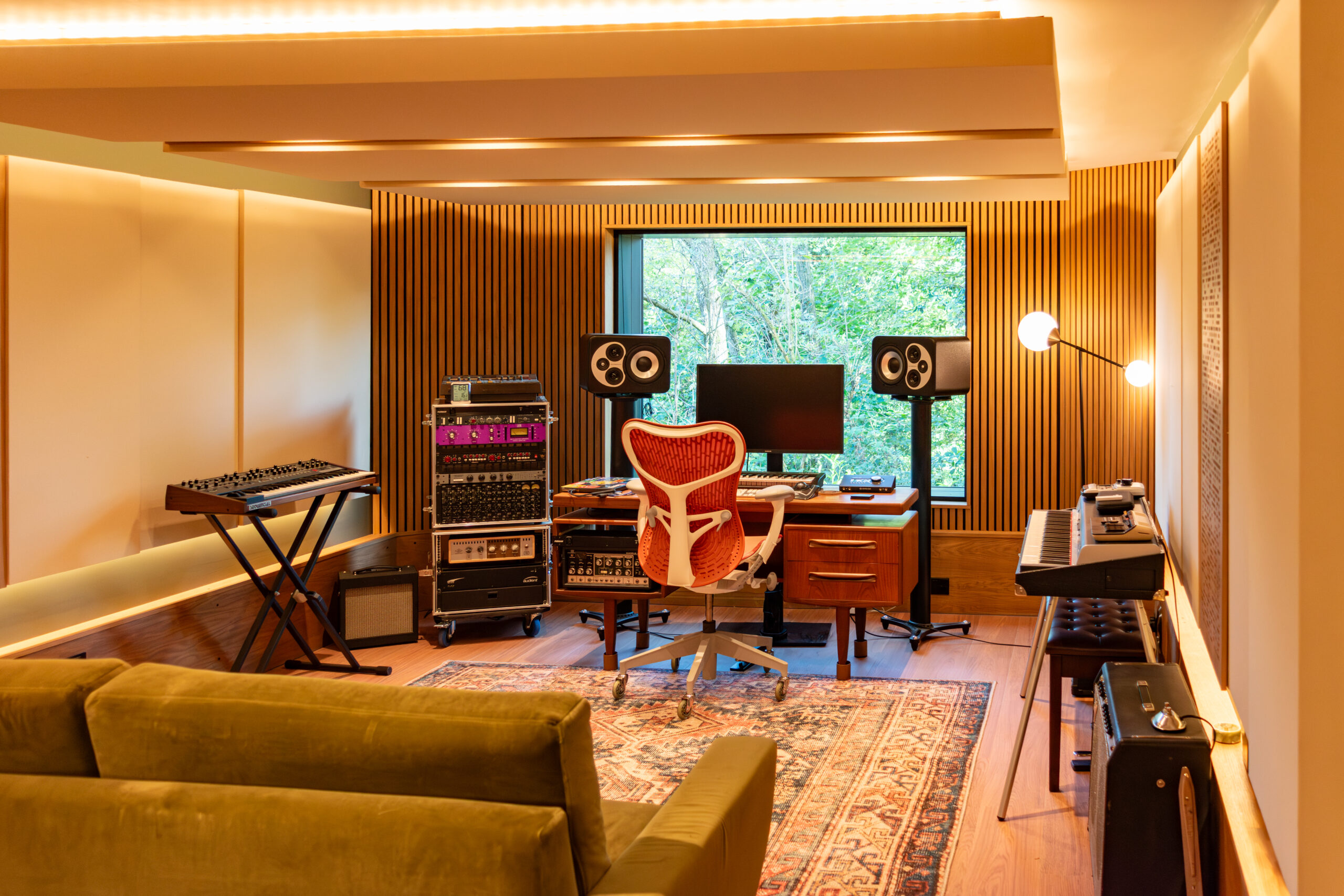
Soundproofing vs acoustic treatment
Soundproofing works by making it more difficult for sound to travel freely past a boundary. Acoustic treatment controls the sound inside the room, using materials that absorb, reflect and diffuse problematic sound waves.
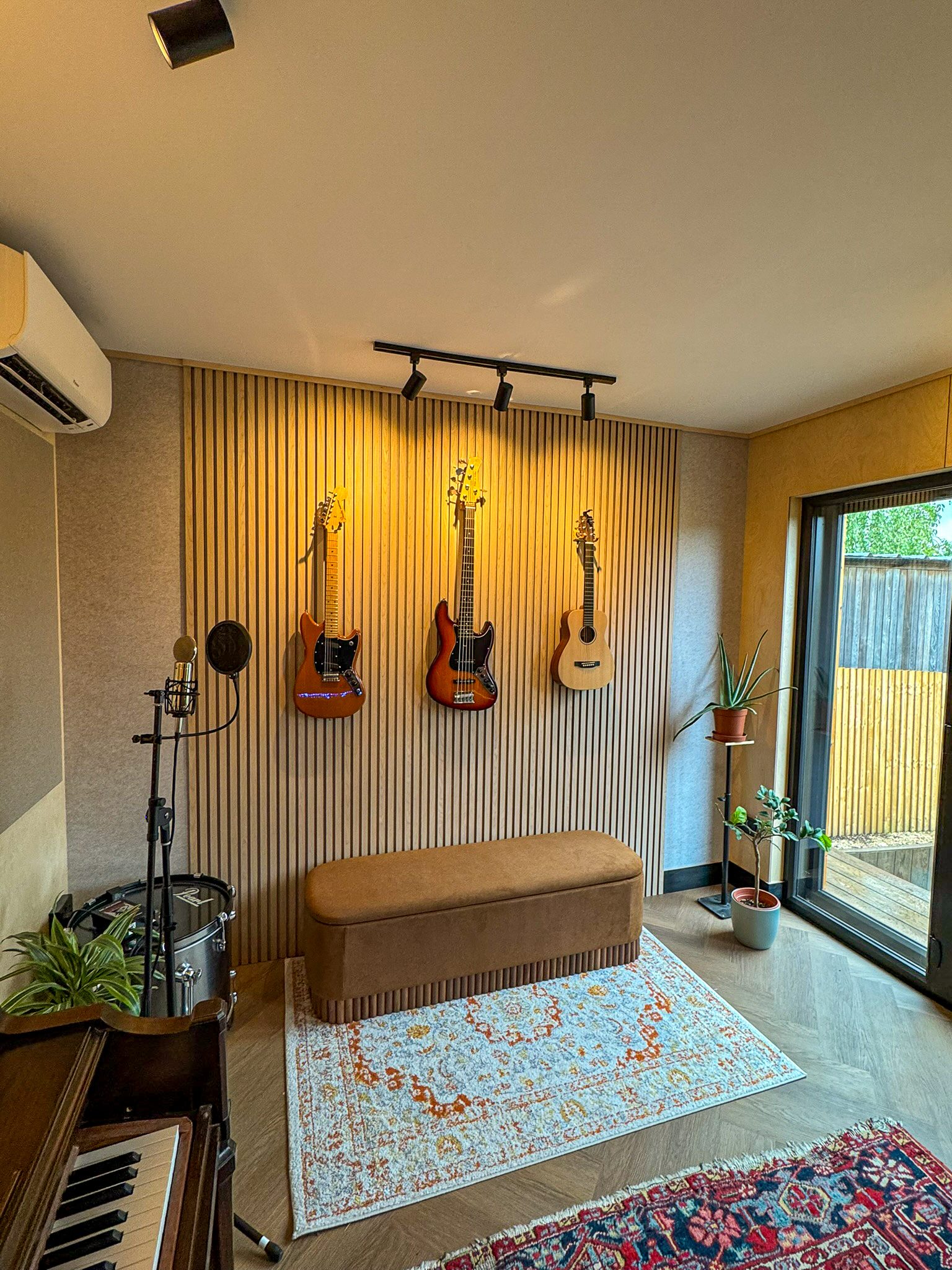
Why room acoustics matter
In an untreated room, sound waves propagate across the space naturally, meaning standing waves and resonances build up easily - emphasizing or reducing our perception of the presence of certain frequencies in the mix. This can lead to ill informed mix decisions, due to the playback not being a true representation of the audio itself. That leads to mixes that don't translate outside of your room. With the room treated properly, you can trust what you hear. That means faster work, and accurate mix decisions.
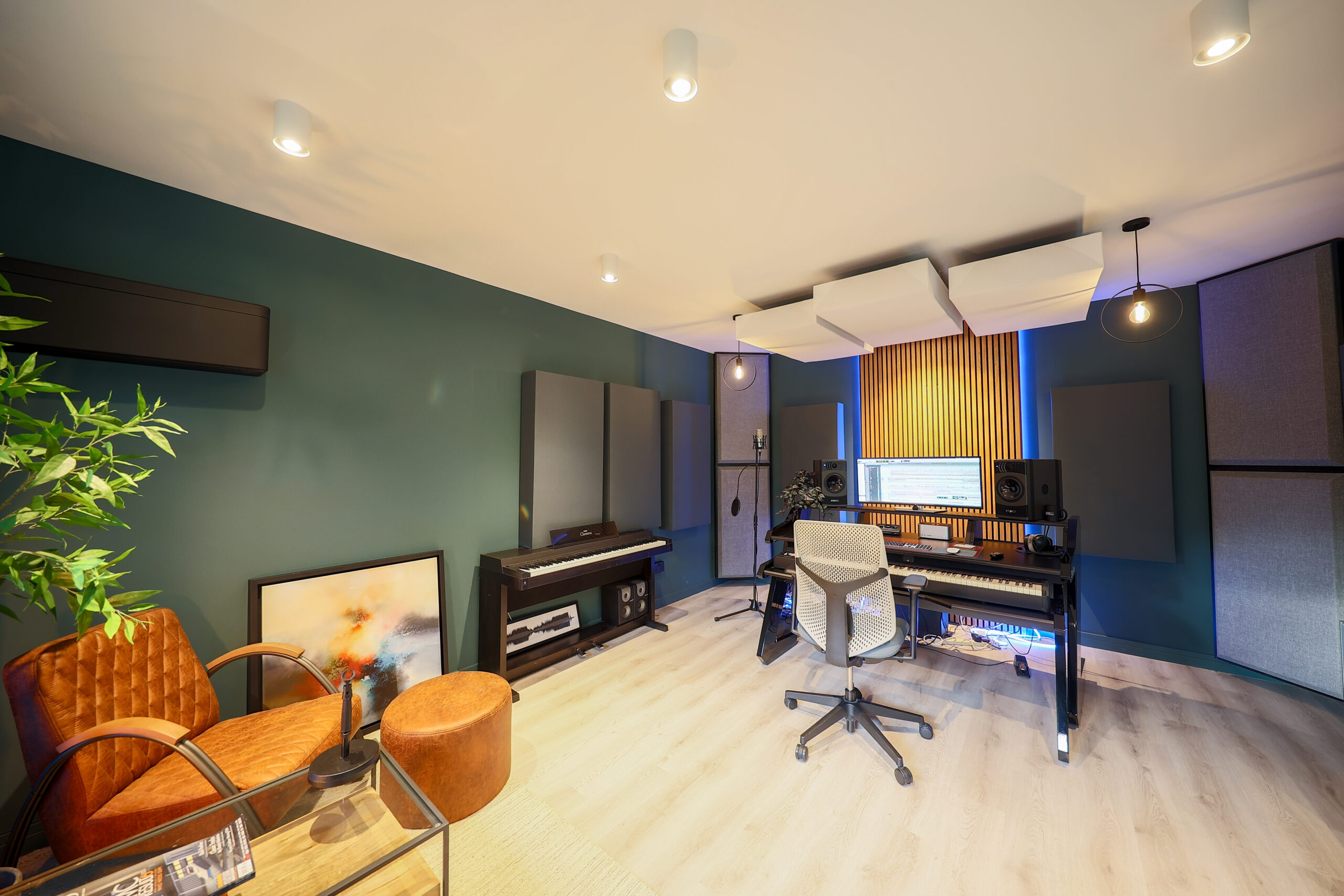
How rooms are treated
Treatment typically includes:
- Bass traps: to control low-frequency build-up, often in the corners
- Acoustic wall and ceiling panels: absorption to manage reflections and decay time
- Diffuser panels: to scatter sound waves, breaking up standing waves.
- Isolation pads: for monitors and equipment
Treatment can be bespoke, off-the-shelf, or a considered blend of both, with wooden slatting and finishes chosen to suit the look you want.

Dead room or live room?
Not every space should sound the same. A control room for critical listening is usually kept “dead”, with a low decay time, so you hear the true direct signal clearly. A live room for recording often keeps some carefully controlled liveliness, allowing for the space to add natural desirable harmonics to takes, should the engineers want them. At Sonic Box, we design around how you'll actually use the room.
Our acoustic design process
Assess
We'll discuss how the space will be used, and what the "right" sound is for you
Room modelling
Modelling the room using industry standard software's and independent calculous to assess current frequency response, standing waves, problematic room modes, reflection points and decay time.
Design proposal
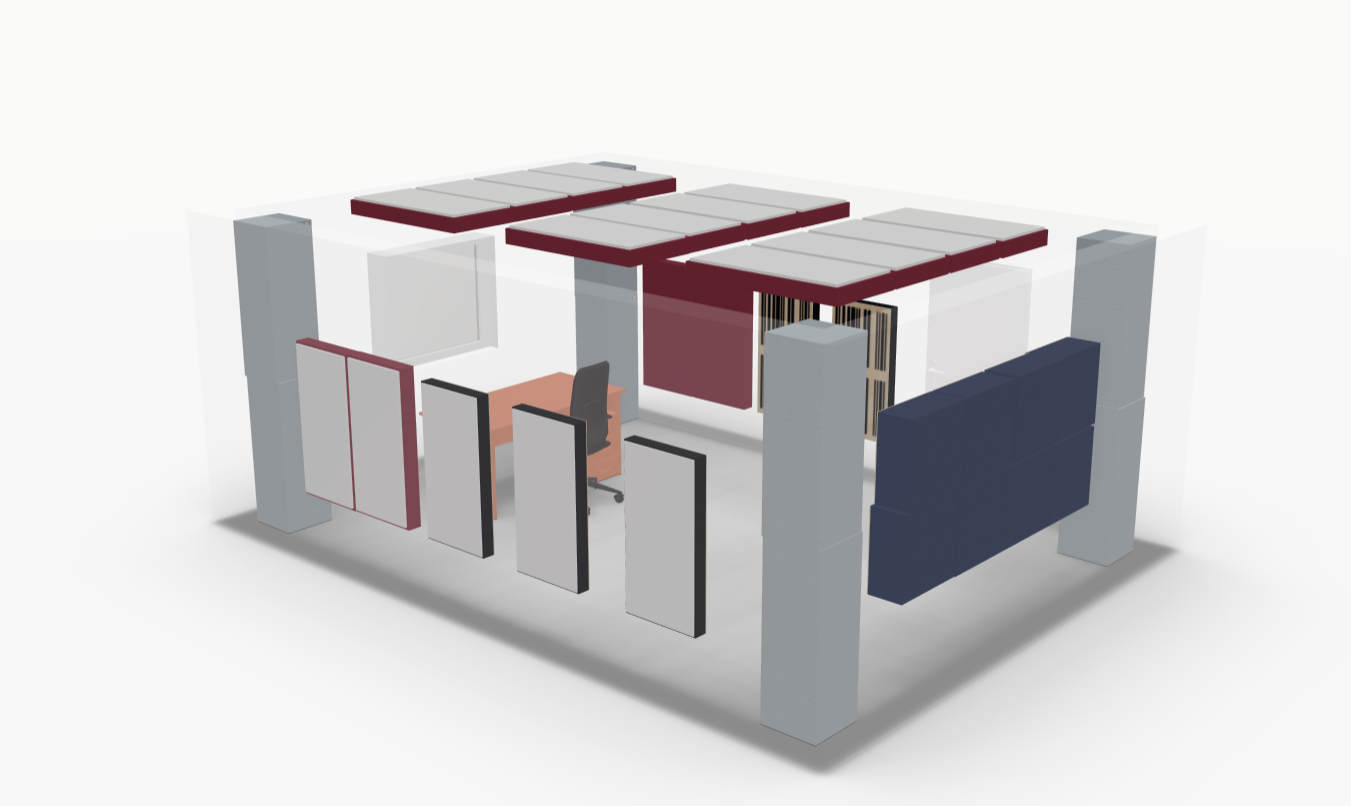
treatment proposals delivered to client. With a range of options to suit varying budgets. We'll address modelling, covering materials, placement and expected results, alongside aesthetic choices, delivered with renders and digestible acoustic data.
Build
We construct the music studios, making the neccasary adjusments to the room to fit the acoustic treatment package
Fit-out and tuning
We verify the performance of the installed acoustic treatment against the predicted findings, fine-tuning the design to ensure maximum results.
Acoustics in our builds
Mark Crew's studio is a fully bespoke SB-X, with a flat, neutral listening environment and a decay time suited to critical listening.
Portsmouth production studio has a GIK Acoustics treatment plan throughout, including custom bass trapping to the corners.
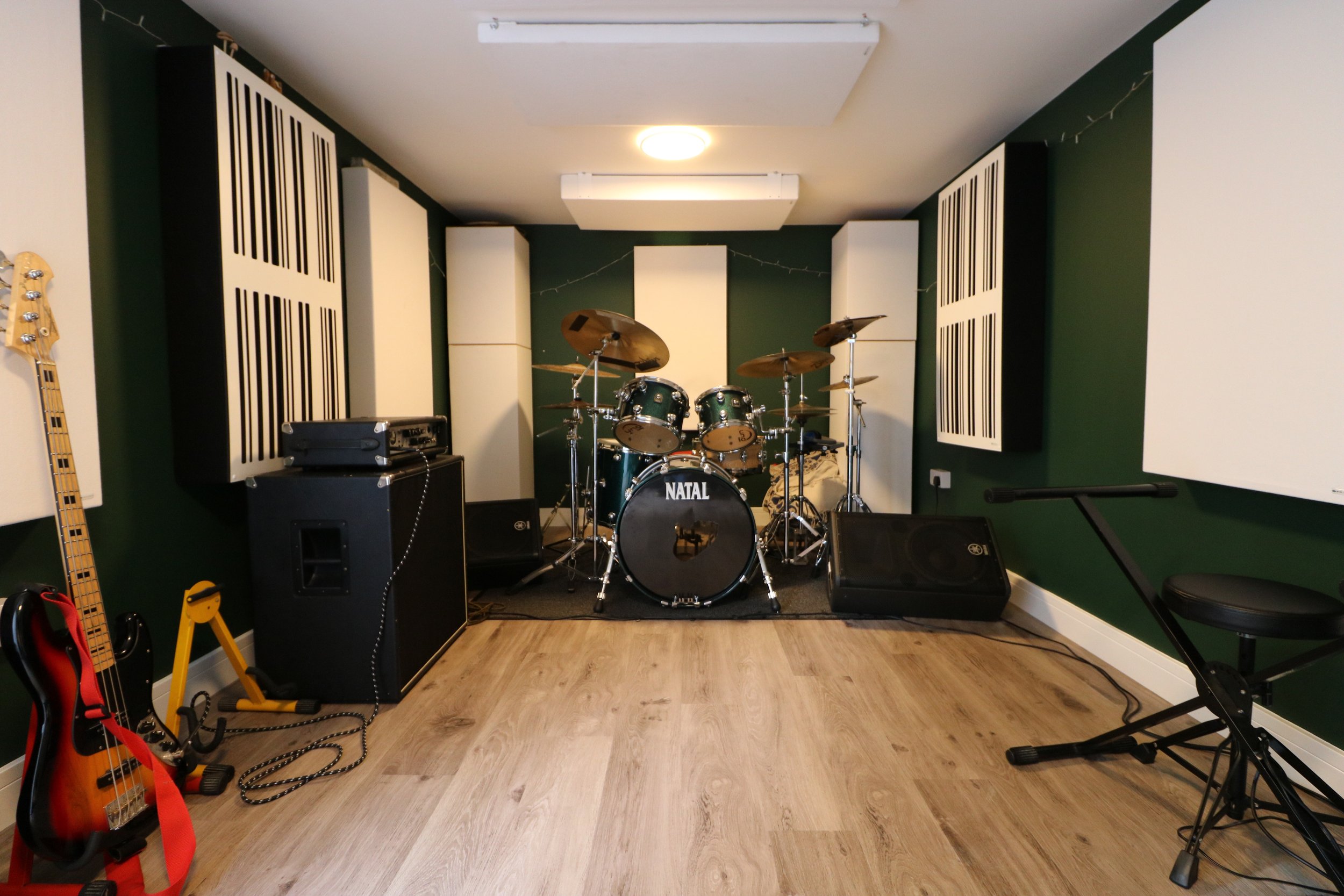
London drum room uses GIK treatment to manage early reflections and decay time.
Pricing
Every studio comes as a soundproofed shell, as per specification. Acoustic treatment on top of that is priced separately.